Carmen Catalá

Assistant Professor

Investigating how plant hormones and cellular processes regulate fruit development, especially in tomato.

Intro
Research Focus

What are the processes involved in fruit formation?

Email: cc283@cornell.edu

Office Phone: 607-254-8694
Office/Lab:
315/316

Senior Research Associate
Section of Plant Biology
School of Integrative Plant Science
Cornell University

Philippe Nicolas, Richard J Pattison, Yi Zheng, Taly Lapidot-Cohen, Yariv Brotman, Sonia Osorio, Alisdair R Fernie, Zhangjun Fei, Carmen Catalá, Starch deficiency in tomato causes transcriptional reprogramming that modulates fruit development, metabolism, and stress responsesJournal of Experimental Botany, Volume 74, Issue 20, 31 October 2023, Pages 6331–6348

Philippe Nicolas, Yoshihito Shinozaki, Adrian Powell, Glenn Philippe, Stephen I Snyder, Kan Bao, Yi Zheng, Yimin Xu, Lance Courtney, Julia Vrebalov, Clare L Casteel, Lukas A Mueller, Zhangjun Fei, James J Giovannoni, Jocelyn K C Rose, Carmen Catalá, Spatiotemporal dynamics of the tomato fruit transcriptome under prolonged water stressPlant Physiology, Volume 190, Issue 4, December 2022, Pages 2557–2578

Wang, X., Gao, L., Jiao, C. et al. Genome of Solanum pimpinellifolium provides insights into structural variants during tomato breedingNat Commun 11, 5817 (2020).

Shinozaki, Y., Nicolas, P., Fernandez-Pozo, N. et al. High-resolution spatiotemporal transcriptome mapping of tomato fruit development and ripeningNat Commun 9, 364 (2018).

Noe Fernandez-Pozo, Yi Zheng, Stephen I Snyder, Philippe Nicolas, Yoshihito Shinozaki, Zhangjun Fei, Carmen Catala, James J Giovannoni, Jocelyn K.C Rose, Lukas A Mueller, The Tomato Expression AtlasBioinformatics, Volume 33, Issue 15, August 2017, Pages 2397–2398

Research Overview

Our research focuses on the molecular regulation of fruit development using tomato as a model system. Fruit development is a crucial process in the sexual reproduction of flowering plants and of critical importance for seed dispersal, plant fitness and agricultural yield. We use molecular and genetic techniques to investigate the complex interplay of gene expression changes, signaling events, and hormonal activity, controlling fruit development.


The tissue-specific transcript landscape of the developing tomato fruit

Fruit are complex organs, comprising distinct tissues and cell types, that arise from the coordinated growth and development of floral tissues following pollination and fertilization. We have used Laser Capture Microdissection (LCM) coupled with mRNA profiling (RNAseq) to analyze transcriptional changes during tomato fruit ontogeny with a high level of temporal and spatial resolution. We are building upon the data generated from our tissue-specific transcriptome studies by selecting candidate genes with potentially novel functions in the control of fruit development. (Pattison et al., 2015 https://doi.org/10.1104/pp.15.00287, Shinozaki et al., 2018 https://doi.org/10.1038/s41467-017-02782-9).


Fruit development under adverse environmental conditions
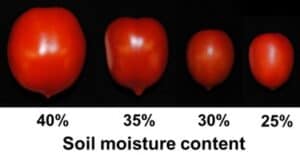
Successful fruit development after fertilization involves tightly regulated changes in gene expression, that can be severely affected by environmental stresses such as drought. We have analyzed the tissue specific transcriptional responses of tomato fruit developing under water deficit, and uncovered transcriptional networks controlling the responses of the fruit to abiotic stress (Nicolas et al., 2022 https://doi.org/10.1093/plphys/kiac445).

We are also investigating the role that sugars and starch metabolism play in regulating tissue or cell-specific responses to drought stress (Nicolas et al., 2023 https://doi.org/10.1093/jxb/erad212). The long-term goal of this research is to elucidate the molecular pathways underlying adaptations and responses to drought during to the plant reproductive phase.

One of our projects explores the genetic diversity offered by tomato wild species, which are adapted to extreme habitats, to reveal genes and pathways underlying successful fruit development under adverse environments. We are generating comprehensive tissue-specific transcriptomes of tomato wild relatives and examining regulatory variation using allele-specific expression analysis in hybrids with cultivated varieties. Our main goal is to increase our understanding of the molecular basis for phenotypic variation in fruit development.

Image link

Picture2
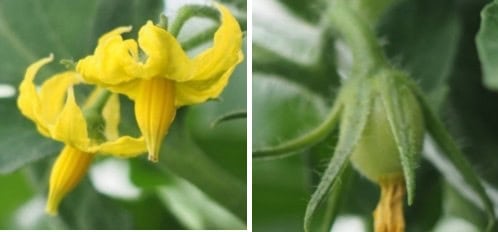
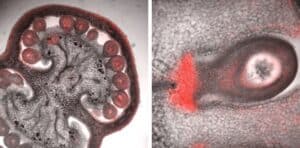
Spatial variation of the auxin response detected by the activity of an auxin responsive reporter driving the expression of a fluorescent protein. Ovaries at anthesis showing fluorescence in the ovules (left). Seed showing auxin activity in the funiculus (right).

Picture3
Fruit from tomato plants exposed to prolonged water stress showing a substantial reduction in size. Plants were grown under well-watered conditions at 40% volumetric water content or under water deficiency at three intensity levels.

Lab Members

In the News

Research Experience

Internships

BTI offers a summer research experience program for undergraduate and high school students.

Intern Projects in the Catalá Lab

Investigating the molecular mechanisms underlying fruit set and development

Fruit development is a crucial process in the sexual reproduction of flowering plants and of critical importance for seed dispersal, plant fitness, and agricultural yield. Fruit are complex organs which arise from the coordinated growth and development of floral tissues following pollination. Research in the Catala lab focuses on the molecular regulation of fruit formation and early development using tomato as a model system. We use molecular and genetic techniques to investigate the complex interplay of gene expression changes, signaling events, and hormonal activity, controlling fruit development. The lab also studies the effect of drought stress, an increasing problem in crop production, on tomato fruit set and growth. We are taking advantage of the genetic diversity of wild tomato species to examine the molecular basis of adaptations to water stress and other fruit quality traits.